



The modern European security system is undergoing a transformation driven by the Russian Federation’s aggressive policy, which includes the gradual subjugation of Belarus, a full-scale invasion of Ukraine, and the use of hybrid pressure tools against NATO member states. In the context of the war against Ukraine and growing confrontation with the West, NATO is regarded as the key adversary and main source of threats in Russia’s and, to a lesser extent, Belarus’s strategic and military-political documents. This shapes not only their official rhetoric but also concrete actions aimed at destabilizing the Alliance’s eastern flank.
Analyzing the two states’ official documents allows us to trace the evolution of their attitudes toward NATO, ranging from formal cooperation and balancing, as in Belarus’s case, to open confrontation and viewing NATO as a key threat. Such an analysis provides an opportunity to understand the logic behind Moscow’s foreign policy, within whose trajectory Minsk is compelled to operate. It also allows for a better assessment of the potential set of influence tools employed by the two states.
The study analyzed the mechanisms that create security threats to the Baltic States and Poland, including military, informational-psychological, energy, and migration instruments of influence. Particular attention was paid to the ways in which Russian-Belarusian integration transforms the regional security environment by creating multidimensional risks and increasing the vulnerability of border states.
An important aspect of the study was the use of a scenario-based approach to identify potential trajectories for the development of the regional security architecture. This approach involved defining three groups of variables that would influence the regional situation over the next year. This modeling allowed us to outline a wide range of scenarios in which the Russian-Ukrainian war, Belarus’s independence, and the regional situation are interconnected. Finally, based on the results obtained, recommendations were made regarding measures to counter security challenges and prevent further expansion by the Russian Federation.
1. PERCEPTION OF NATO MEMBER STATES IN THE
Authors:
- Anton Oksentiuk, Research Fellow of the Russian and Belarusian Studies Programme,
- Foreign Policy Council “Ukrainian Prism”.
- Pavlo Rad, Research Fellow of the Russian and Belarusian Studies Programme,
- Foreign Policy Council “Ukrainian Prism”.
- Rostyslav Klimov, Junior Research Fellow of the Regional Initiatives and Neighborhood Programme, Foreign Policy Council “Ukrainian Prism”.
- Anastasiia Fihura, Intern of the Regional Initiatives and Neighborhood Programme, Foreign Policy Council “Ukrainian Prism”.
- Denys Klymenko, Intern of the Regional Initiatives and Neighborhood Programme, Foreign Policy Council “Ukrainian Prism”.
Editor:
- Iaroslav Chornogor, PhD in History, Director of the Russian and Belarusian Studies Programme, Foreign Policy Council “Ukrainian Prism”.
Art and Technical Editor:
- Anatolii Chernysh, Research Fellow of the Russian and Belarusian Studies Programme, Foreign Policy Council “Ukrainian Prism”.
PROGRAMMATIC DOCUMENTS OF THE RUSSIAN FEDERATION AND THE REPUBLIC OF BELARUS
A general characteristic of the foreign policy strategies of the Russian Federation and, to a lesser extent, the Republic of Belarus in recent decades is the presence of a large number of diverse programmatic documents, which are generally aimed at describing and permanently legitimizing the personal negative attitudes of both dictators toward NATO. But while in the case of Belarus this refers to the alignment of its foreign policy with Moscow’s course, the Russian strategy itself has always been shaped exclusively by Putin’s personal views. This means that by observing changes in the most important programmatic documents over the past 20 years, it is possible not only to describe the evolution of Russia’s attitude toward NATO member states, but also to consider potential future, medium-term, and long-term Kremlin policy toward the West.
These trends can be traced by comparing the relevant documents in terms of their versions before and after 2014, the turning point following the start of the full-scale invasion in 2022, and their subsequent radical revisions in the period from 2023 to 2025. This applies not only to public rhetoric but also to actual actions – such as institutionalizing the permanent confrontation between Russia and the Alliance by creating a line of tension along the NATO border, as well as the direct use of Belarusian territory for conducting relevant hybrid operations and the potential permanent deployment of its own troops at any scale.
Therefore, analyzing national security strategies, foreign policy concepts, military and sectoral doctrines, and specific presidential decrees of the Russian Federation and the Republic of Belarus is important. This allows us to examine the formation of concrete threats and triggers for NATO member states, especially those on the eastern flank, as well as the instruments Russia and Belarus will use to implement corresponding political and military decisions.
1.1. Russia
In the context of Russia, it is appropriate to note that in its programmatic documents, NATO is traditionally regarded as the main political factor. It can be stated that all of Moscow’s foreign policy, as reflected in the relevant documents, is primarily perceived through the prism of the Alliance’s policy.
In military-political terms, this has always been reflected in the Military Doctrine of the Russian Federation. Even the 2010 edition of this document contains references to Russia’s long-standing rhetoric about the “eastward expansion of NATO,” a political slogan Moscow has used for decades to justify its desire for a “sphere of influence” that primarily includes post-Soviet states. Notably, the 2010 edition of the Military Doctrine was adopted during Dmitry Medvedev’s presidency, at the height of the “reset” policy in U.S.-Russia relations under Barack Obama’s administration. Even during a period of relatively stable relations between the two countries, Moscow’s position on maintaining its “sphere of influence” and indirect control over the security of relevant states (primarily Ukraine, Georgia, and Moldova) remained firm. Therefore, it is also unlikely that the position of the Russian authorities will change in the near future. The same applies to Russia’s approach to the North Atlantic Alliance itself.
After the beginning of Russian aggression against Ukraine in 2014–2015, there was a significant radicalization of rhetoric regarding NATO. This shift was reflected in the new edition of the Military Doctrine adopted in 2014, which remains in force. It explicitly states that NATO and its “growing military potential” constitute the main risk for the Russian Federation. Moreover, the topic of the Alliance appears first in the section “Main External Threats.” An important emphasis of the current version of Russia’s Military Doctrine is that, in Moscow’s view, the creation and deployment of strategic missile defense systems are also among the elements posing the greatest threat to Russia. In practice, the Russian Federation has repeatedly demonstrated its willingness to expand the narrative of threat from missile defense. This was particularly evident in December 2021, when the Kremlin issued an ultimatum demanding that the United States and NATO as a whole promptly sign an agreement on “non-expansion of the Alliance” and roll back the entire infrastructure of the organization to its 1997 state, including all regional missile defense systems.
After the start of the full-scale invasion of Ukraine, senior Russian officials – represented by Russian Foreign Minister Sergey Lavrov – repeatedly hinted that the settlement of the Russian-Ukrainian war should take place in the format of a certain global security agreement, while referring to their ultimatum from the end of 2021. Thus, there is a high probability that during future peace negotiations, especially with the direct involvement of the United States, the Russian Federation will once again return to the issue of NATO infrastructure. And although in this regard Moscow’s position does not appear stable and depends solely on the political-military situation “in the moment,” it can be stated that moving forward, the Russian authorities will continue to promote the topic of withdrawing NATO forces and infrastructure from the territories of relevant Alliance member states.
This will primarily concern NATO’s eastern flank, posing the greatest threat to the Baltic States and Poland. It should also be noted that even in the rather concise 2014 Military Doctrine, the Russian authorities indirectly incorporated the notion of their own “sphere of influence.” Thus, among external threats, they included the establishment in neighboring states of “regimes whose policies threaten the interests of the Russian Federation,” and such wording directly emphasizes the alleged lack of independent foreign and domestic policy in the respective states.
As in the case of the Military Doctrine, following the events of 2014 and against the background of the permanent political conflict with NATO, the National Security Strategy of the Russian Federation was also updated. This update occurred in two iterations – first in 2015, and then in 2021. In the 2015 edition of the Strategy, the United States and NATO were openly mentioned for the first time as sources of military risks. The Russian authorities explicitly stated that “Russia’s strengthening is taking place against the backdrop of new security threats… The policy of containing Russia pursued by the United States and its allies harms regional and global security.” The updated Strategy recorded a number of threats that would later be transformed into a more radical form of confrontation between Russia and NATO – threats to “color revolutions,” traditional values, and information attacks. Even then, among internal threats were references to “attempts at external interference in domestic affairs, undermining unity and the constitutional order.” In addition, the document included radical phrases such as “increasing NATO military activity and the Alliance’s approach to Russia’s borders,” presented as an unacceptable threat to the Russian Federation.
This edition of the National Security Strategy effectively stated for the first time at the official level the existence of significant political conflict between the Alliance and Russia, blaming NATO’s “expansion” as the cause of this conflict. At the same time, it is entirely clear that in Moscow’s understanding, “expansion” referred exclusively to political support for Ukraine after 2014, as well as support for Georgia. In 2021, a new edition of the National Security Strategy of the Russian Federation was adopted. It remains in force today, and the theme of confrontation with NATO is even more clearly visible in the document. Thus, in addition to purely military aspects (NATO bases, exercises near Russia’s borders), information and cyber threats are also listed as part of the overall confrontation. Attention should also be drawn to the hybrid dimension of this confrontation, as in the section “Defense of the Country,” the document directly hints at the use of military force “outside the country” to “protect the national interests and citizens of the Russian Federation.” And although formally this is presented as a task of Russia’s defense, in practice such wording implies the possibility of using military force against a target country under the pretext of “protecting Russians.” This danger primarily concerns the Baltic States – Lithuania, Latvia, and Estonia.
The evolution of Russia’s antagonistic attitude toward NATO is also evident in the changes to the Concept of the Foreign Policy of the Russian Federation, which has undergone three revisions over the past 15 years – in 2013, 2016, and 2023. The 2013 version became the last one in which no elements of confrontation with the Alliance were present. As with other programmatic documents, radical changes began after Russia’s aggression against Ukraine in 2014. The 2016 edition of the Concept fully formalized the shift from nominal partnership with NATO to full-scale political confrontation. This document directly points to a serious crisis in relations with the West, caused by the geopolitical expansion of NATO and the EU and their unwillingness to begin “the implementation of political statements on the formation of a common European system of security and cooperation.” In practice, such wording again refers to NATO’s support for Ukraine. Moreover, Russia began to perceive NATO through the prism of an instrument of the United States. As is traditional for all programmatic documents, the 2016 Concept expresses negative attitudes toward NATO enlargement, the Alliance’s military infrastructure approaching Russia’s borders, and the increase in NATO activity in border regions, viewing these actions as violating the principle of indivisible security.
An important element of Russian strategy is that, formally, Moscow has always remained open to building relations with the Alliance. Thus, in the 2016 version of the Concept, it is stated explicitly that Russia will “build relations with NATO based on the degree of the Alliance’s readiness for equal partnership and strict adherence to the principles and norms of international law.” At the same time, it is clear that such a scenario is possible only if Moscow receives the necessary political concessions from the West, the main one being the recognition of the Kremlin’s right to have its own “sphere of influence” in the post-Soviet space. As early as 2016, when describing relations with the United States, Russia explicitly declared that it “reserves the right to respond harshly to unfriendly actions, including through strengthening defense and taking mirror or asymmetric measures.” It is obvious that in this way Moscow justified any potential actions aimed at destabilizing the security environment in relations with NATO. In practice, this is exactly what happened with the start of Russia’s full-scale invasion.
The following year, in 2023, Putin signed a decree on a new Foreign Policy Concept, which today is one of the most confrontational among all programmatic documents. In it, Russia not only proclaimed itself a “civilization-state” but also directly stated that the United States and its allies (essentially referring to NATO) used the Russian-Ukrainian war as a pretext for launching a new type of hybrid war against Russia, the goal of which is “to undermine its military, economic, and technological capabilities, restrict its sovereignty in domestic and foreign policy, and destroy its territorial integrity.” It is important to note that in the updated Concept, the Russian authorities claim readiness to defend their national interests by neutralizing threats to security, territorial integrity, and sovereignty, as well as those of its allies and partners from European states, the North Atlantic Treaty Organization, and the European Union. This formulation is the most confrontational of all previous versions of Russia’s Foreign Policy Concept.
The Maritime Doctrine of the Russian Federation of 2022 was updated after the start of the full-scale invasion and similarly demonstrates direct confrontation with the North Atlantic Alliance. The doctrine explicitly states that the expansion of NATO’s military infrastructure toward Russia’s borders, as well as the increase in exercises conducted in the maritime areas adjacent to Russian territory, constitute one of the main challenges and threats to Russia’s national security and its development related to the World Ocean.
Thus, an examination of Russia’s programmatic documents reveals a direct and consistent idea of opposing NATO as the main military threat. The political approach described in the doctrines and concepts evolved from a relatively partnership-oriented stance (before 2014) to an openly confrontational one (2022–2025). In addition, the current stage demonstrates that the Kremlin is oriented toward long-term confrontation, where the greatest threat concerns the countries of NATO’s eastern flank.
1.2. Belarus
Unlike Russia’s long-standing policy associated with a negative perception of the North Atlantic Alliance, which was reflected in its respective documents, Belarus’s attitude toward NATO for a significant period of time was not inherently antagonistic. In fact, until the events of 2020, Minsk pursued a policy of balancing between Russia and NATO member states. This stemmed primarily from economic and political considerations. Moreover, Belarusian foreign policy has always focused (and this remains true today) not on geopolitical issues but on advancing its economic interests-selling its own goods and building channels for trade, which fits into the broader framework of preserving Lukashenka’s regime. Only after the 2020 elections and subsequent protests, as well as the sanctions imposed as a result, which effectively isolated Belarus from Western countries, was Minsk forced to reorient almost entirely toward Moscow in order to address its most pressing short-term problems. This means that in the long-term perspective, provided Belarusian independence is preserved and relations with the West de-escalate, there remains a possibility of Belarus returning to the foreign-policy course its elites adhered to before 2020.
These conditions were outlined in the 2010 edition of the National Security Concept of the Republic of Belarus. The text of the document explicitly states that Minsk pursues a “peaceful foreign policy and seeks to create conditions for acquiring neutral status.” Belarus declared a non-nuclear status, expressed readiness for cooperation, and at the same time condemned the expansion of military blocs. However, in the broader context this latter factor was rather formal, as the same Concept refers to NATO as an organization with which Belarus seeks cooperation on an equal basis.
Only in 2024, after the beginning of Russia’s full-scale invasion of Ukraine, did Minsk adopt a new National Security Concept, in which NATO is effectively framed as the main external risk factor. At the same time, the Alliance itself is not mentioned directly in the text. Instead, the Belarusian authorities included euphemisms such as “military-political alliances,” “militarization of neighboring states,” and “changing balance of power.” It is entirely obvious that this policy is primarily directed against the countries of NATO’s eastern flank. This is effectively confirmed by statements from Belarusian officials. For example, in August 2023, Belarusian Defense Minister Viktor Khrenin explicitly described a “direct military confrontation with NATO” in the future as possible. And although, as in the case of Russian documents, Minsk formally declares readiness for cooperation, unlike Moscow, such a scenario is in fact possible. Everything will depend solely on Minsk’s political will, its ability to balance Russian influence, and the readiness of NATO member states to offset Russia’s economic influence on the Belarusian economy.
As with the Belarusian National Security Concept, in 2024 the Belarusian Military Doctrine was also revised. With regard to NATO, its importance lies primarily in the formal legalization of Belarus hosting Russian nuclear weapons on its territory. At the same time, it is officially confirmed that these weapons serve as part of preventive deterrence of potential adversaries (essentially NATO) from “launching armed aggression.” It is entirely clear that in this context the nuclear factor serves as an instrument of intimidation and politico-military pressure by the Lukashenka regime and Russia against NATO member states, particularly Poland and Lithuania.
Thus, it can be stated that in recent years Belarus’s abandonment of its non-nuclear status and the updating of its strategic documents have been carried out in the wake of Russia’s foreign-policy approach, driven primarily by the significant increase in Minsk’s dependence on the Kremlin. However, even under these conditions, some attempts to preserve a small degree of maneuvering space are noticeable, expressed through avoiding overly harsh rhetoric and the absence of direct accusations against NATO member states. Whereas Belarus’s previous foreign-policy course was determined mainly by economic interests and Lukashenka’s personal interests, today, due to the partial erosion of sovereignty, Minsk is forced to play along quite aggressively with Russia’s intentions, the consequences of which are felt most strongly by certain countries on NATO’s eastern flank.
2. THREATS OF RUSSIAN-BELARUSIAN COOPERATION TO COUNTRIES BORDERING BELARUS
2.1. Lithuania
The alliance between Russia and Belarus increases military, political, informational, and energy-related risks, affecting Lithuania’s security. Belarus’s integration into Russia’s military-political sphere broadens the scope of potential aggression against NATO, effectively transforming Belarus into a launching pad for geopolitical expansion. At the same time, the problem of modern conflicts arises in blurred boundaries between war and peace, which allows actions in a gray zone and the use of covert means to achieve geopolitical goals. Lithuania, in this context, faces a wide range of challenges.
Military threat. Russia is testing the readiness of the Alliance to respond to hybrid and traditional threats. This was confirmed by the flights of Russian drones from Belarusian territory and the “Zapad-2025” exercises recorded in July–August 2025. Meanwhile, Belarusian and Russian security services conduct espionage on Lithuanian territory. The Belarusian KGB has also launched a large-scale campaign against regime opponents abroad in recent years. The agency carries out operations targeting the Belarusian diaspora. By promoting the pseudo-historical narrative of “Litvinism” and organizing provocations in Lithuania, Minsk forces Vilnius to implement stricter security protocols. As a result, since 2023, more than 350 Belarusians have been stripped of residence permits. Despite the general unpopularity of this movement among Belarusians, Lithuania will be forced to continue focusing on security and responding to possible manifestations of ideologies that are destructive to it.
Migration threat. Cooperation with Russia allows official Minsk to partially overcome regional isolation and establish closer contacts with Asian countries. However, with Moscow’s support, Minsk pays not only by limiting its sovereignty but also by participating in creating long-term threats for neighboring states. The absence of strict border checks with Russia, as well as the recognition of visas issued by Russia on Belarusian territory, allows the Kremlin to direct large flows of migrants into Belarus, from where they attempt to enter EU countries. Lithuania’s strict reaction to such incidents creates room for speculation and accusations against Vilnius of inhumanity and harsh treatment of migrants, which may have negative reputational consequences and partially increase Euroscepticism within Lithuania.
Nuclear security. In addition, Belarus and Russia engage in creating permanent psychological pressure and intimidation of neighboring countries. One element of this is the Belarusian Nuclear Power Plant, located only 50 km from Vilnius. After the boycott of Belarusian electricity in 2020 (one of the goals of building the NPP was the export of electricity to neighboring states), Lithuania regularly accuses Minsk of violating nuclear safety standards according to the IAEA and considers the plant an environmental risk. Another element is the alleged deployment of Russian non-strategic nuclear weapons in Belarus, which serves as a psychological operation to blackmail Western countries and provoke anti-war sentiments in the West.
To sum up, the combination of military, migration, informational, and energy factors creates in Lithuania a strong focus on defense and a priority on national security. The full spectrum of informational and psychological operations carried out by Moscow with Minsk’s support can, in some cases, destabilize Lithuanian society and spread panic. Provocations involving drones or the infiltration of unmarked military personnel into the country can reinforce this effect and make Lithuania more vulnerable to Russian pressure.
2.2. Latvia
Latvia is under constant pressure from Russia and Belarus, manifested in military, informational, and internal political spheres.
Military threat. For Latvia, the strengthening of the Russia-Belarus alliance means an increased threat from the southeast. Moscow may consider a maneuver through southeastern Latvia (from Belarusian territory via Daugavpils and Rēzekne) as one of the less predictable scenarios of aggression. This “allied” integration has effectively turned Belarus into a springboard for Russia against NATO. Although a direct military attack on Latvia now seems unlikely due to the war in Ukraine, in the medium term the risk is growing: according to Western intelligence, Russia could restore its military potential and be ready to attack the Baltics within 3–4 years.
Information-psychological operations. The “Zapad” military exercises and others remain instruments for demonstrating power and exerting pressure. In 2023–2025, they simulate war with NATO, accompanied by aggressive rhetoric from Moscow and Minsk. Therefore, the Latvian Constitution Protection Bureau (SAB) has warned of a likely intensification of information campaigns against Latvia and the Alliance, although the direct risk was assessed as low. Despite the scaled-down “Zapad-2025,” the scenarios retain a “nuclear component”-the use of tactical weapons from Belarusian territory. Although this is primarily an element of information-psychological operations, it significantly complicates the security environment by combining land, informational, and nuclear threats.
Internal destabilization. Latvia’s significant Russian-speaking community (approximately 25% of the population, up to 70% in Daugavpils) is an internal factor that increases vulnerability. Due to linguistic and cultural differences, as well as the consumption of pro-Kremlin content, a “parallel reality” has formed. This creates risks of hybrid influence, ranging from information provocations to potential unrest. The Security Service has documented expressions of support for Russia, dissemination of misinformation, and attempts to incite interethnic tensions, particularly concerning the removal of Soviet monuments. In Latgale, some local councils resisted implementing the 2022 law banning the glorification of totalitarian regimes, creating political “islands of alienation” that Moscow could exploit. After February 24, 2022, Riga strengthened its security and integration policy. The perception of Russia as a threat increased from 38% to 69%, and Derussification measures were introduced, including blocking Russian TV channels, restricting immigration, switching schools to Latvian, and dismantling Soviet monuments. While these measures reduce propaganda influence, they must be balanced to avoid alienating loyal citizens.
Hybrid pressure. Moscow understands that direct military aggression against the Baltic states is currently unjustifiable, so it relies on hybrid warfare, including information attacks, border incidents, cyber activity, and political manipulation. Propaganda discredits NATO and the EU, and new technologies, such as deepfakes and AI, make such campaigns more effective. Since 2021, an ongoing “migration war” has been waged, and in 2025, drone launches from Belarusian territory were recorded. Simultaneously, there have been cyberattacks (including those by Killnet) and acts of sabotage, such as the arson at the Museum of Occupation in Riga. After the failure of “Harmony” in the 2022 elections, the Kremlin has attempted to use marginal political forces and religious influence channels.
These actions aim to weaken Latvia without open war. It is a “war of a thousand cuts” intended to undermine societal resilience. The Russian-speaking diaspora requires special attention, as the Kremlin could exploit its alienation. Information campaigns about the “oppression of Russians” are accompanied by military demonstrations near the border, creating an atmosphere of fear. Although NATO membership deters direct invasion, the risk does not disappear; the deployment of Russian missiles in Belarus enables strikes on targets throughout the Baltics. Even the small possibility of a nuclear or large-scale attack must be considered existential and accounted for in defense planning. The Russia-Belarus alliance enables the Kremlin to employ both military and non-military pressure by using Belarusian territory for provocations, crises, and intelligence operations. Therefore, Latvia must strengthen its defense, cyber protection, and coordination with NATO and EU partners simultaneously.
2.3. Poland
In his annual speech in April 2025, the Polish Foreign Minister outlined the country’s foreign policy tasks in conditions of geopolitical instability: strengthening defense capabilities, cooperation with the United States, and supporting the world order. He noted that sanctions against Russia and Belarus remain an important tool for countering Russian aggression. Poland is gradually becoming a “testing ground” for hybrid attacks, which Minsk and Moscow use as instruments of hybrid pressure on the EU and NATO.
Military threat. The explosion of a Russian drone in Osiny in August 2025 and repeated incidents of Russian drones violating Polish airspace are further evidence that Moscow is systematically testing the Alliance’s defensive capabilities and reaction speed, spreading fear and polarization among Europeans, and preparing for further escalation. If a strike elicits only “deep concern” and cautious statements, Moscow interprets this as a green light for the next, bolder step. This is how hybrid warfare escalates: through the gradual normalization of the unacceptable.
Intelligence operations. Joint actions of Russian and Belarusian intelligence services aim to undermine trust in state institutions and create a constant atmosphere of threat. Acts of sabotage in 2024–2025, including arson at shopping centers and attempts to paralyze critical infrastructure, demonstrate active use of agent networks. At the same time, the informational component enhances the synergy of these threats. The provocation during a concert of a Belarusian performer in Warsaw, when Ukrainians displayed a UPA flag, was aimed at inflaming historical grievances and undermining the strategic partnership between Warsaw and Kyiv. This incident illustrates that the Kremlin has a broader disintegration policy scenario aimed at increasing instability and mutual distrust in the region.
Migration threat. The organized migration crisis on the Polish-Belarusian border, ongoing since 2021, is another tool of hybrid pressure. Warsaw built a steel fence, created a buffer zone, and introduced restrictions on the right to asylum-measures also adopted by Lithuania and Latvia. Despite a full range of security measures, Poland is the country most frequently targeted by migrant attacks. For example, in 2024, nearly 30,000 attempts to illegally cross the Polish border were recorded, while Lithuania and Latvia recorded 231 and 2,238 such incidents, respectively.
In summary, Poland has found itself at the epicenter of hybrid confrontation, where military, informational, and migration threats mutually reinforce each other. With the support of Minsk, Moscow systematically tests Poland’s resilience and NATO’s readiness to respond to provocations. In response, Warsaw consistently strengthens its defense, cooperates with allies, and demonstrates the ability to respond. At the same time, Poland’s long-term security will directly depend on the unity of the EU and NATO and their determination to prevent the normalization of hybrid aggression.
3. SCENARIOS FOR CHANGES IN THE REGIONAL SECURITY ARCHITECTURE
Lukashenka’s desire to maintain power at any cost led to the suppression of the 2020 protests, the imposition of unprecedented sanctions against Belarus, deepening dependence on Russia, and, as a consequence, complicity in Russia’s full-scale invasion of Ukraine.
At the same time, the preservation of Belarus’s independence and sovereignty is one of the key factors that will allow the region to avoid an even more serious escalation of the security situation and create the prerequisites for the formation of a new regional security architecture after the conclusion of the Russia-Ukraine war.
Therefore, most of the factors that will determine the development of the security situation in the region over the next year are external and largely do not depend on the actions of official Minsk. They can be conditionally grouped into three blocks:
- War and negotiations:
- The course of the Russia-Ukraine war;
- The outcome of negotiations regarding the cessation of hostilities.
- Situation in Russia:
- The ability of the Russian economy to sustain itself;
- The perception of Western states by the Russian elites.
- Internal political stability and Belarus’s relations with key players:
- Stability of the Lukashenka regime and its ability to resist Russian influence;
- The outcome of US–Belarus consultations and Belarus’s prospects for exiting regional isolation.
The matrix of the future regional security system is structured so that the horizontal axis indicates the level of regime stability, while the vertical axis represents the level of stability in the region (Fig. 1).
It is important to note that the elements of these scenarios are interdependent, and achieving one level of conditions makes it possible to move to more favorable regional development options. Conversely, a slightly different configuration of factors can lead to an escalation of the security situation in the region. When modeling the scenarios, unlikely events, such as Ukraine’s defeat or the collapse of Russia, were not taken into account.
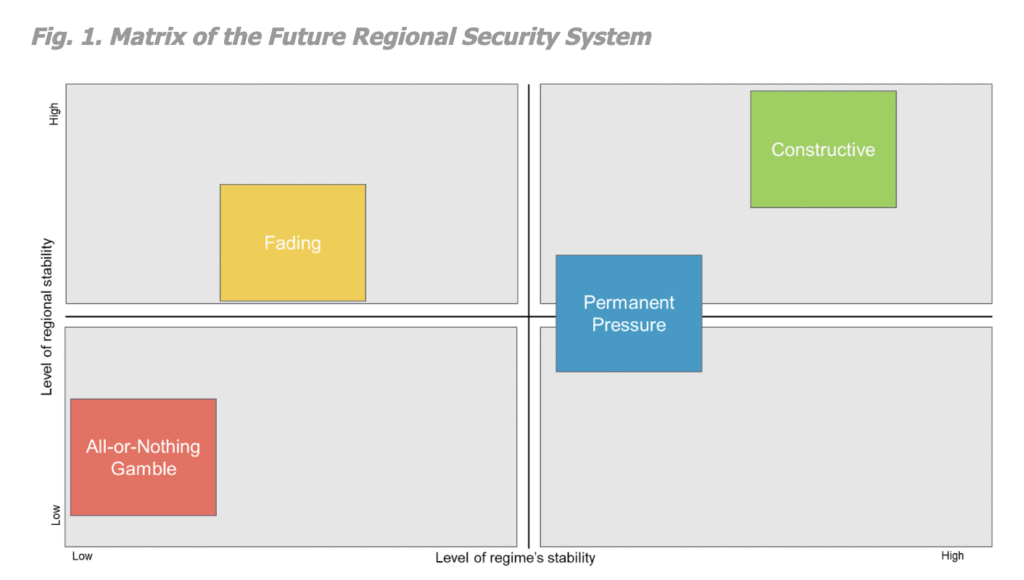
Fig. 1. Matrix of the Future Regional Security System
Scenario 1. Permanent Pressure
The Russia–Ukraine war will continue at its current intensity, and any attempts by the Donald Trump administration to resolve the conflict diplomatically will not yield positive results due to fundamental differences between Kyiv and Moscow. The resilience of the Russian economy will be sufficient to sustain another year of combat relatively steadily, while the need to break the deadlock on the battlefield and undermine support for Ukraine will compel Russian leadership to more actively test the limits of what is permissible in its interactions with Western states.
Given the continuation of hostilities without a clear understanding of their end timeline, Belarus will continue to provide support to the Russian Federation both in terms of military production and participation in information and psychological operations. Official Minsk will continue to play the nuclear intimidation card, exert migration pressure on borders with its Western neighbors, and be involved in provocations directed against the Eastern flank NATO member states.
In parallel with supporting Russia and demonstrating loyalty to the Kremlin, the Lukashenka regime will continue seeking ways to exit regional isolation. Belarus–U.S. consultations will continue, and the Belarusian dictator will attempt to demonstrate his usefulness to both American and Russian parties in order to deflect suspicion from the Russian elites and achieve mutual concessions in negotiations with the Americans. Some Belarusian companies will see partial lifting of U.S. sanctions, and showcasing successes on the American track will help stimulate Chinese interest in Belarus, particularly regarding hopes for further de-escalation in Minsk’s relations with European neighbors and the reduction of threats to Chinese land-based exports and Chinese interests in the region overall.
This complex foreign policy configuration will allow Lukashenka to balance between the three largest global players without being directly drawn into combat against Ukraine or NATO member states, with the hope of eventually recovering relations with neighboring countries. This scenario also presumes the absence of significant intensification of hybrid operations or direct military actions against NATO’s Eastern flank, ensuring relative predictability of the situation.
Scenario 2. All-or-Nothing Gamble
The Russian side will reject any proposals for resolving the Russia–Ukraine war and will move toward the sharpest escalation seen in recent years. Moscow will be driven to more decisive actions by worsening economic problems, the risk of losing the ability to continue hostilities at the current intensity by 2027, the tepid reaction of Western countries to Russian provocations, and the conviction of Russian elites regarding the weakness of Western politicians and the U.S.’s unpreparedness to defend its allies.
The Kremlin will apply all the most painful mechanisms of influence on Belarus, including canceling the deferment of debt repayments, beginning to block logistical channels for Belarusian exports, and closing its market to certain categories of Belarusian goods and services, leaving official Minsk no choice but to support Russia’s escalation strategy. Belarusian territory will become a platform for complex hybrid operations, which will include not only drone launches, migration pressure, cyber operations, and incursions by unmarked military forces but also the seizure of certain parts of neighboring countries’ territories. The purpose of these actions by Russia is to exchange the captured territories for Western countries’ withdrawal of support for Ukraine, potentially allowing the Kremlin to achieve significant battlefield gains.
Under these conditions, the Lukashenka regime will lose the ability to continue dialogue with Washington, and support for Russia will make reconciliation with neighboring countries impossible in the long term. Belarus will also lose the main arguments upon which cooperation with China was based, as the country’s transit potential will be reduced to zero, and Beijing will no longer be able to consider Belarus as an entry point for its interests in Europe. While the country will formally retain the external attributes of autonomy, in reality Belarus’s sovereignty will be severely undermined, increasing the risks of internal political destabilization and, de facto, the loss of independence in the near future.
Scenario 3. Fading
The Russia–Ukraine war continues for another year and the parties fail to reach legally binding agreements to end it through peaceful negotiations. The strategic deadlock will deepen, leaving neither Russia nor Ukraine with the means to change the situation in their favor. Both sides will exhaust their means of increasing military pressure, causing the Russian economy to stagnate and the Belarusian economy to become unstable.
These negative trends will push Belarusian officials to seek solutions by activating contacts with the West and demonstrating a constructive role in the region. The Lukashenka regime will attempt to strengthen its position through humanitarian initiatives, acting as a mediator in prisoner exchanges, civilian evacuations, and similar activities. Simultaneously, Lukashenka will seek to offer his mediation role to Ukraine, Russia, and the United States to reach certain informal agreements on halting mutual strikes against critical infrastructure and other key assets, with the ultimate goal of freezing the frontline without a formal peace settlement.
This stance by official Minsk, combined with gestures toward Western countries, will allow for significant progress in consultations with the United States and create conditions for initiating dialogue with European neighbors, increasing China’s interest in potential new forms of cooperation with Belarus. The reduction and eventual cessation of hostilities will diminish the war’s impact as the main destabilizing factor in the region, creating additional space for Belarus’s foreign policy maneuvering.
Under this scenario, security threats to NATO’s eastern flank countries will noticeably decrease in the short- and medium-term. However, if European actors respond too slowly to the emerging window of opportunity for partially reducing Minsk’s overdependence on Russia, there is a risk that worsening socio-economic problems in Belarus could trigger internal destabilization, making the country more susceptible to Russian influence. In such a case, the fragile calm along the frontline and the erosion of Belarusian sovereignty could lead to a new wave of escalation.
Scenario 4. Constructive
Although the Russia–Ukraine war will continue, the inability to achieve significant successes on the battlefield, destabilize NATO member countries through hybrid influence tools, as well as economic problems and their potential negative consequences, will push Russia toward a more constructive position regarding the resolution of the Russia–Ukraine war. In exchange for sanctions relief, the Kremlin will agree to legally formalize the conditions of a peaceful settlement.
At the same time, the negotiation process will also involve Belarus, as efforts to encourage the country to take a more constructive role in the region will be supported by the gradual lifting of Western sanctions, including European ones. Minsk will gain additional levers to diversify export flows and adjust its foreign policy course, which will significantly boost Chinese interest in the country and reinforce its perception as a key point for China’s economic interests in the region.
Under this scenario, the risks of serious security threats from Belarus or Russia will be significantly reduced; however, the likelihood of Russia attempting to prevent Belarus from distancing itself will increase. An important component of this process will be the dynamics in relations between the United States and China: if both countries play a role in balancing Russian influence, seeking to weaken Moscow, there is a strong chance that the newly formed security configuration in the region will be sufficiently stable to minimize security challenges for NATO’s eastern flank in the medium- and long-term, while also ensuring Belarus’ existence as an independent state.
CONCLUSIONS
After the start of the full-scale invasion, the alliance between Russia and Belarus solidified long-term plans for confrontation with NATO. Over the past three years, Belarusian territory has been fully transformed into a quasi-foothold for Russian hybrid operations. To date, this foothold has still not been used to its full potential. At the same time, the very existence of this capability and the potential political will of Moscow place NATO – particularly the countries of its eastern flank – under permanent military-political threat
The source of this threat in the context of pan-European security is Russia’s long-standing ambition to maintain its own territorial “sphere of influence,” which includes the countries of the post-Soviet space. This is confirmed by Russian strategic documents, regardless of the political situation or the leadership in power within the country. As a result, the likelihood of a change in this Russian strategy, and consequently the disappearance of the permanent threat of escalation in Eastern and Central Europe, is unlikely in the coming years and potentially decades.
In the case of Belarus, the situation is fundamentally different. Minsk’s dependence on Moscow is evident in both economic and security spheres. This means that if Belarus can rid itself of this burden, a foundation will be created for gradually distancing Minsk from Kremlin policy, which will require not only the political will of European countries but also a detailed action strategy. This would minimize the likelihood of pressure on NATO’s eastern flank from Belarusian territory.
Until that point, the situation in Eastern Europe will continue to worsen, primarily for NATO’s eastern flank countries. The nature of these threats will be multifactorial-from hybrid operations such as migration crises, military exercises, and radical political statements with information-psychological effects, to current elements of ongoing hybrid warfare, including UAV (drone) launches. In some countries in the region, such as Latvia, this vulnerability is compounded by the concentration of Russian-speaking populations in certain districts and the presence of local political “islands” of alienation, which Russia could exploit to justify aggression and other hostile actions.
Thus, over the coming months, the intensity and form of Russian pressure in Eastern Europe will be primarily determined by the following factors: the course of the Russia–Ukraine war; the resilience of the Russian economy; the internal stability of the Belarusian regime; and its contacts with the West. For Ukraine and NATO countries, this means shifting from purely reactive measures to preventive and integrated approaches, such as strengthening joint intelligence and counterintelligence in the direction of Belarus, deploying layered air defense and counter-drone capabilities, and developing a joint European approach to detaching Belarus from Russia. The West’s strategic goal should be to preserve Belarus’s formal independence as a safeguard against broader Russian force deployment along Belarus’s borders with Ukraine and NATO.
RECOMMENDATIONS
Considering the situation in the region, the interests of the countries of NATO’s eastern flank and Ukraine lie in effectively countering threats from Russia with the support of Belarus to prevent escalation, and in the longer term, to prevent the absorption of Belarus by Russia, without which long-term stabilization of the situation is impossible.
Countering threats:
- Cooperation with Ukraine. European countries need to revitalize cooperation with Ukraine in terms of exchanging experience and best practices for countering Russian threats. This includes not only combating cyber operations, soft influence, etc., but also direct military actions. European countries need to adapt their military doctrines to the modern conditions of warfare.
- Integration of the diaspora. This recommendation primarily concerns the Baltic countries and Poland, where Russian and Belarusian migrants reside. In the case of Latvia, the government should invest in Latgale through educational and cultural programs: free Latvian language courses, support for independent bilingual media, and engagement of youth in national initiatives. This will reduce the influence of Russian propaganda and deprive Moscow of the opportunity to manipulate the topic of “persecution of Russians.” Similar initiatives to integrate Belarusians and Russians also make sense in Poland and Lithuania.
- Resilience to information and cyberattacks. It is necessary not only to block hostile content but also to create a proactive narrative, support fact-checking, and promote media literacy. In the cyber sphere, this involves expanding the number of specialists, training to protect critical infrastructure, and sharing data with allies (Lithuania, Estonia, Poland, Ukraine).
- Border control and response to provocations. Strengthen surveillance on the border with Belarus (drones, sensors) and practice rapid joint responses by police in cases of migration crises or “little green men.” Temporary closure of airspace in case of provocations should become standard practice.
- Defense capabilities and alliances. NATO’s eastern flank countries should increase defense spending, develop territorial defense, and modernize their armies while simultaneously pursuing an expanded NATO presence. Regular joint exercises with neighbors and participation in Alliance projects against hybrid threats will make any aggression too risky.
Preventing the absorption of Belarus by Russia:
- Formulating an action plan. Poland, Ukraine, and the Baltic countries, possibly within the framework of the “Lublin Triangle,” should develop and provide Lukashenka, in coordination with the EU and partners, with a confidential and pragmatic “roadmap” of possible concessions by the regime and how the West would respond to such actions. This step does not imply automatic readiness of Western countries to turn the page, but it will demonstrate to Minsk that a certain window of opportunity remains open.
- Creating a negotiation track. In light of Lithuania’s overall unsuccessful bets on Sviatlana Tsikhanouskaya, Poland could take the lead in establishing an alternative negotiation track to the American one on Belarus. Maintaining a differentiated dialogue with Minsk will allow for better monitoring of developments in Belarus, assessment of elite sentiments, and evaluation of the feasibility of partial distancing from Russia. Communication can also be used to address practical issues, primarily of a humanitarian nature.
- Preparation for a change of power. Simultaneously, European countries and Ukraine need to prepare for scenarios of regime change in Belarus, considering Lukashenka’s health and the potential paralysis of the government system following his unexpected departure from power. Developing an action plan will allow better readiness to respond to Russia’s attempts to consolidate its influence in Belarus during periods of uncertainty and to integrate the country into its security space.
This policy paper was prepared by the Russian and Belarusian Studies Programme and the Regional Initiatives and Neighborhood Programme of the Foreign Policy Council “Ukrainian Prism” with support from the International Renaissance Foundation. The views expressed are the sole responsibility of the authors and do not necessarily reflect the position of the International Renaissance Foundation.